
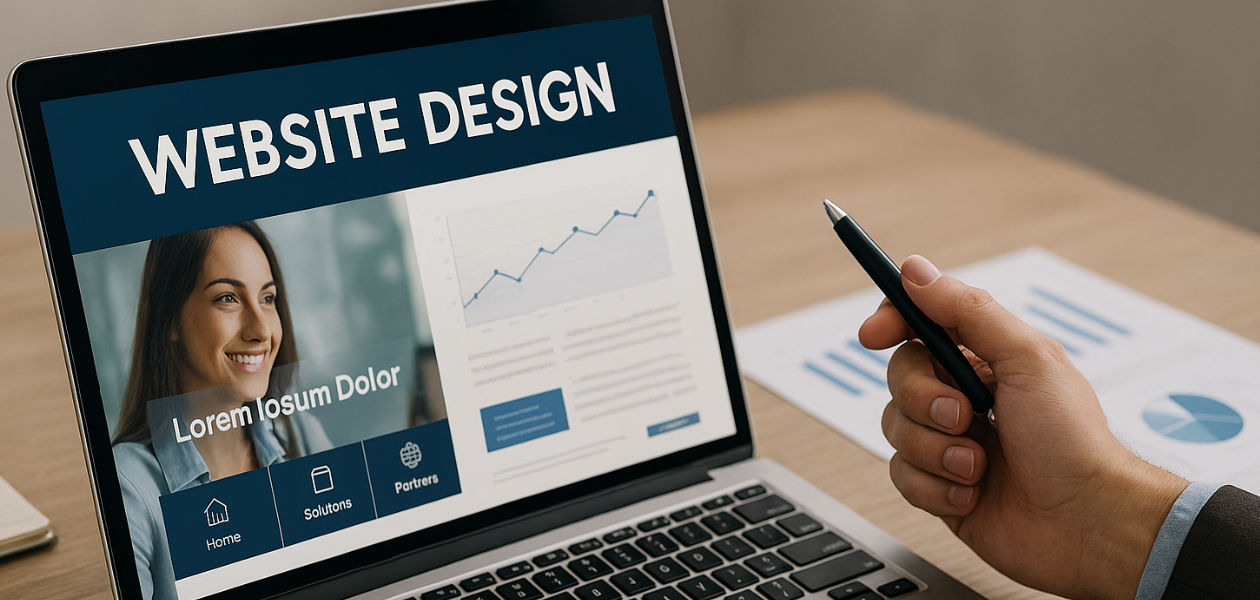
In the digital age of 2025, your website has become far more than an online presence — it has evolved into the core foundation of your brand, credibility, and sales strategy. Customers today form opinions about a business within seconds of landing on its website, and these first few seconds determine whether they trust your brand or abandon your page entirely. In a world where competition is fierce and websites are the modern storefront, your design plays a powerful role in shaping customer perception, influencing buying behavior, and ultimately driving revenue. The impact of website design on trust and sales is deeper than most businesses realize. Every color choice, every layout decision, every image, piece of content, and loading speed contributes to whether a visitor sees your business as credible, professional, and worthy of their time and money. This is why website design has become one of the most strategic tools for business growth — and companies that invest in high-quality design consistently outperform those that neglect it.
A modern, well-designed website instantly communicates professionalism. When users see a clean, visually appealing layout, intuitive navigation, high-quality graphics, and a smooth interface, they automatically assume the business is reliable and trustworthy. People associate good design with competence. On the other hand, an outdated, cluttered, or slow-loading website triggers doubts. It makes customers question your legitimacy, your experience, and even the quality of your products or services. In 2025, customers expect digital excellence because they interact daily with top-tier apps and websites. Their standards are higher than ever, and they compare every online experience to the best they’ve seen. This means that even if your product is good, a poorly designed website can destroy your chances of earning their trust. Research shows that over 90% of first impressions relate directly to website design, and more than 70% of consumers say they do not trust businesses with outdated websites. This alone demonstrates the powerful connection between design and trust.
Beyond first impressions, website design influences how customers explore your brand. If your website is cluttered, confusing, or difficult to navigate, visitors feel frustrated and leave. If menus are unclear, text is too small, colors are inconsistent, or pages are hard to understand, customers lose confidence. Great website design makes the entire customer journey smooth — from the moment they land on your homepage to the moment they take action. Thoughtful design uses whitespace, visual hierarchy, clear headings, strategically placed call-to-action buttons, easy navigation, and purposeful content to guide users effortlessly. When customers enjoy the browsing experience, they trust the business more, spend more time exploring, and are more likely to convert. User experience (UX) and design psychology play a significant role in shaping trust because they show customers that the brand cares about clarity, convenience, and professionalism.
The emotional impact of design is also deeply connected to trust. Colors, typography, spacing, images, and branding elements influence how users feel on your site. For example, blue tones communicate trust, stability, and security, which is why many tech and finance companies use them. Minimalistic design with clean typography creates a sense of luxury and reliability. High-quality images make your brand appear premium. On the other hand, inconsistent fonts, poor color combinations, or pixelated images create suspicion and disconnect. When your website design evokes positive emotions, customers naturally feel safe and confident interacting with your brand. This emotional trust directly impacts decision-making and increases the likelihood of purchasing or enquiring.
Website design also affects credibility, especially through elements such as testimonials, portfolios, certifications, awards, images of real work, and trust badges. When these elements are displayed in a visually appealing and professional way, customers feel reassured that your business is legitimate and experienced. Social proof, when presented with high-quality design, becomes a powerful trust-building tool. For example, well-designed testimonial layouts, premium-looking client logos, or polished case studies significantly influence how customers perceive your business. Even small design details like icon styles, button shapes, and page transitions contribute to creating a sense of reliability. Trust is not built through content alone — it is built through the combination of content and design.
Another major way website design impacts sales is through conversion-focused design structures. Conversions happen when users take desired actions such as making a purchase, booking a service, filling out a form, or sending an enquiry. Conversion-driven design places call-to-action buttons strategically, uses contrasting colors to highlight important actions, ensures forms are simple, and uses persuasive layouts that encourage engagement. If your call-to-action buttons are poorly placed, if your forms are too long, or if your checkout page feels confusing, customers abandon the process. Good design reduces friction and makes the buying journey smooth. This directly increases sales. Modern businesses understand that every second of delay reduces conversions, and every design flaw leads to lost revenue. This is why high-converting design is one of the most valuable investments in any business today.
A crucial design factor that affects both trust and sales is website speed. Customers expect websites to load within 2–3 seconds. A slow website creates frustration, lowers trust, and makes users believe the business is unprofessional. Fast websites create confidence and allow customers to browse comfortably. Page speed is not just a technical factor — it is a part of design experience. In fact, Google ranks faster websites higher because they offer better user satisfaction. When your site loads quickly, customers stay longer, view more pages, and convert at higher rates. Speed is one of the strongest indicators of professionalism in 2025.
Mobile responsiveness is another essential design element that directly influences trust. Since more than 70% of users browse through mobile devices, a website that isn’t mobile-friendly immediately loses credibility. A mobile-responsive website adjusts beautifully to any screen size, maintains clarity, and offers smooth navigation. Businesses that neglect mobile design appear outdated and unreliable. On the other hand, a seamless mobile experience makes customers trust the brand and encourages conversions. Google also prioritizes mobile-friendly websites in search rankings, meaning responsive design improves visibility and reach.
Brand consistency across your website is equally important in building trust. When your fonts, colors, icons, images, and messaging align with your brand identity, customers instantly recognize and remember you. Consistency signals professionalism. In contrast, inconsistent design creates confusion and reduces trust. A cohesive brand identity across your website, social media, and marketing materials sends a strong message: your business is established, reliable, and detail-oriented. This consistency plays a major role in long-term customer loyalty and repeat sales.
In 2025, customers prefer doing business with brands that appear modern, transparent, and easy to understand. A well-designed website makes your business look premium and trustworthy, while a low-quality design makes even a good business appear unprofessional. Website design is the silent salesperson that represents your brand 24/7. It influences how customers feel, how they behave, and whether they take action. In many cases, customers decide to trust or distrust a business entirely based on the website experience.
At TechProFreelancer, we specialize in creating premium, high-converting, visually appealing, and SEO-friendly websites that help businesses build trust, boost credibility, and increase sales. Our designs focus on clarity, speed, user experience, branding, and modern aesthetics to ensure your customers feel confident from the first second they visit your site. With the right design, your website becomes your strongest sales tool — driving growth, increasing enquiries, and elevating your brand to the next level.